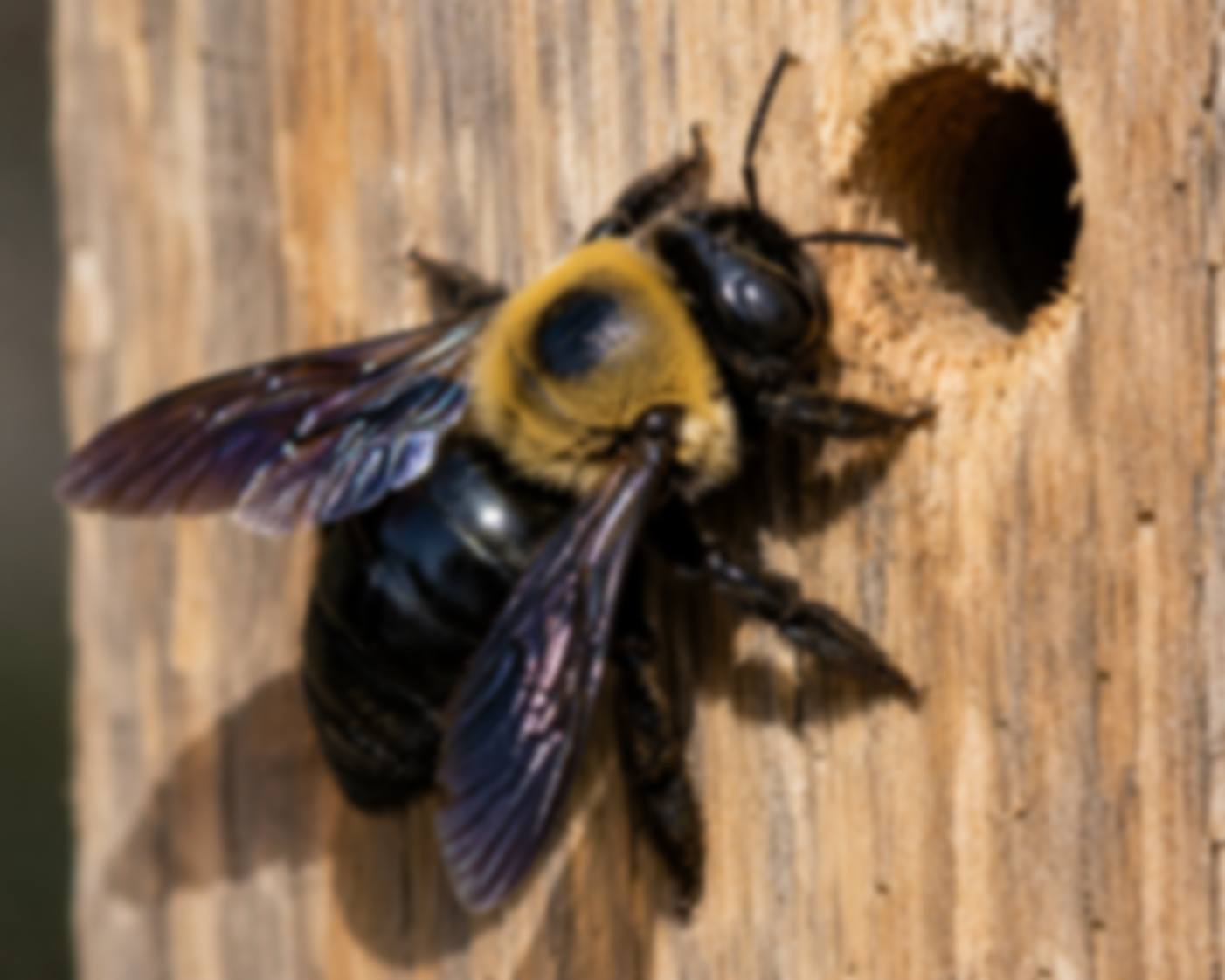
Carpenter bees look like bumblebees but behave very differently - they don't eat wood, they nest in it, and left alone, that damage adds up year after year.
What Are We Dealing With?
Large, black, shiny-bodied bees, often mistaken for bumblebees
Males are territorial and will hover aggressively near people, but don't have a stinger
Females can sting but rarely do - the bigger issue is what they do to the wood, not the sting risk
Why They're a Problem
They drill round, dime-sized holes into eaves, decks, fascia boards, and siding to build nesting galleries
The same holes get reused and expanded year after year, and damage compounds over time
Woodpeckers often peck open the wood chasing the larvae inside, causing even more damage than the bees alone
Where Do They Show Up?
Unpainted or weathered wood - eaves, decks, railings, siding, fascia boards
Cabins with exposed, untreated wood are especially attractive to them
Same nesting spots tend to get reused year over year if untreated
What We Do About It
Careful identification of active holes and nesting activity
Insecticidal dust treatment applied directly into the galleries
Timed around their spring activity period for best results
What You Can Do
Painted or stained wood is much less attractive to them than bare wood
Don't plug or caulk holes yourself before treatment - it can trap bees inside or push them to drill a new exit
Report fresh holes early, especially on decks and eaves at rental properties
Don't Wait Until It Gets Out of Control Contact The Bedbugsters - carpenter bee damage only gets worse the longer it's ignored.